Monday, 29 June 2026

Double Block and Bleed (DBB) Valve in Oil and Gas: Function, Design & Selection

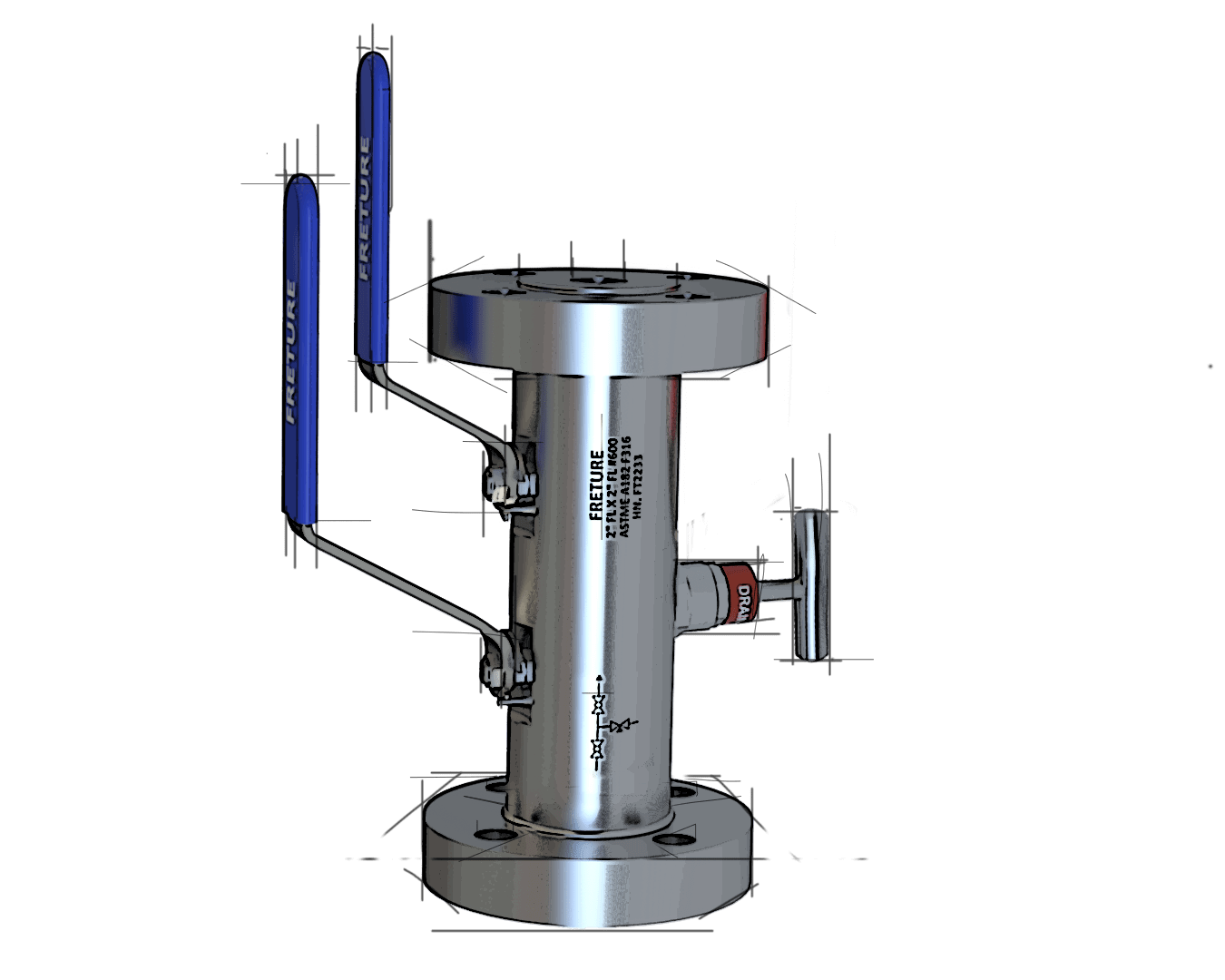
 In oil and gas operations — from upstream wellheads to downstream refinery headers — the cost of an unplanned shutdown or a fugitive emission event can run into crores of rupees within hours. The double block and bleed (DBB) valve is the industry's engineering answer to that risk: a single, compact valve body that delivers dual isolation with a bleed function, replacing two separate block valves and a bleed valve in one integrated unit.

This article explains what a DBB valve is, how it works, why it is preferred across oil and gas applications, and what specifications to look for when selecting one.

What Is a DBB Valve?

A Double Block and Bleed valve is a single-valve assembly that provides two independent seating surfaces that block flow from both the upstream and downstream sides, along with a bleed port between those two seats. When both seats are closed and the cavity between them is vented to atmosphere (or to a collection system), the line is positively isolated — with confirmation.

This is fundamentally different from a single block valve, which provides only one seating surface and no inherent means to verify isolation. In hazardous service, a single block valve is insufficient for safe isolation.

DBB Valve Working Principle

Step 1 — Upstream seat closes: The first seating surface creates a pressure barrier against upstream pipeline pressure.

Step 2 — Downstream seat closes: A second independent seating surface seals the downstream side, trapping the cavity between the two seats.

Step 3 — Bleed port opens: The interspace cavity is opened to a bleed or vent line. Any leakage past either seat is detected here. If the cavity remains at atmospheric pressure, both seats are confirmed leak-tight.

This three-step sequence is why DBB valves are mandatory in high-hazard pipelines under process safety management (PSM) frameworks. Isolation can be visually or instrumentally confirmed before any work begins on the downstream side.

Key Applications in Oil and Gas

1. Pipeline Isolation and Pigging Operations

When launching or receiving a pipeline pig, the section immediately around the pig trap must be positively isolated from the live pipeline. A DBB valve at the pig trap inlet confirms that isolation with a vent point, eliminating the risk of pressurised gas or liquid reaching maintenance personnel.

2. Pressure Gauge and Instrument Root Valves

Pressure transmitters, gauges, and flow instruments are routinely removed for calibration or replacement while the line is live. A DBB valve at the instrument root allows the instrument to be safely removed, the cavity bled, and the instrument replaced — without shutting down the process line. This makes DBB valves the preferred choice for instrument isolation in oil and gas facilities.

3. Chemical Injection Quills

Corrosion inhibitors, hydrate suppressants, and scale inhibitors are injected into live pipelines at high differential pressures. DBB valves on chemical injection connections isolate the injection quill from pipeline pressure during maintenance while allowing the cavity to be depressurised before any coupling is broken.

4. Wellhead and Manifold Isolation

On wellhead trees and production manifolds, DBB valves provide individual well isolation. This is critical during well intervention work, where the upstream reservoir may be at several hundred bar. API 6A-rated DBB valves are standard on wellhead assemblies.

5. Meter Skid Bypass and Isolation

Fiscal metering skids require periodic meter calibration. A DBB valve on the meter bypass allows the meter to be bypassed, the meter section bled, and the meter removed — all while keeping the pipeline in service and preventing unmetered flow through the bypass.

DBB Valve vs. DIB Valve — Understanding the Difference

A closely related term is DIB (Double Isolation and Bleed). The distinction matters under API 6D:

       DBB (Double Block and Bleed): One or both seats may rely on pressure assistance from line pressure (e.g., soft seat or spring-loaded seat). The isolation is effective but seat integrity may be directional.

       DIB (Double Isolation and Bleed): Both seats seal independently in both directions — upstream and downstream — regardless of which side carries pressure. DIB is the more stringent standard.

For most instrument isolation and chemical injection service, DBB is sufficient. For critical pipeline isolation, fiscal metering, and safety-critical isolation, DIB is specified.

Design Configurations

       Ball valve DBB: Most common. Trunnion-mounted ball designs with floating seats provide reliable double isolation. Preferred for pipeline service.

       Gate valve DBB: Used in older installations and for larger bore sizes. Slab gate or expanding gate designs can provide DBB function.

       Needle valve DBB: Common for small-bore instrument root valve applications where precise throttling and positive shutoff are both required.

       Plug valve DBB: Used in corrosive and viscous service where the smooth plug surface resists adhesion.

Applicable Standards and Specifications

       API 6D — Pipeline Valves (defines DBB and DIB requirements for pipeline valves)

       API 6A — Wellhead and Christmas Tree Equipment (wellhead DBB valves)

       ASME B16.34 — Valves: Flanged, Threaded and Welding End

       ISO 14313 — Petroleum and Natural Gas Industries: Pipeline Transportation Systems — Pipeline Valves

       API 598 — Valve Inspection and Testing

What to Specify When Purchasing a DBB Valve for Oil and Gas

       Pressure Class: ANSI 150 through 2500 depending on service pressure

       Bore size: Match to pipeline bore for pig-passable designs

       End connections: Flanged (RF or RTJ), butt-weld, or threaded for instrument valves

       Seat material: PTFE, RPTFE, or metal-to-metal for high-temperature or abrasive service

       Body material: A216 WCB (carbon steel), A351 CF8M (316SS), or Duplex/Super Duplex for sour or offshore service

       Fire-safe design: API 607 / API 6FA certification for hydrocarbon service

       Fugitive emission certification: ISO 15848-1 Class B or better for environmental compliance

Why Specify a Purpose-Built DBB Valve Instead of Two Separate Valves?

       Reduced weight and footprint: One valve body replaces three separate valves and associated piping

       Fewer leak points: Eliminates four additional flanged connections, reducing fugitive emission risk

       Lower installed cost: Despite a higher unit price, total installed cost is typically 20–35% lower

       Simplified operations: Single-valve operation reduces operator error during isolation procedures

       Easier compliance: Single valve SIL assessment and PSV sizing are simpler than a 3-valve assembly

For oil and gas operators working under OISD, PNGRB, or international PSM frameworks, the DBB valve is not merely a convenience — it is a compliance requirement in many isolation scenarios. Specifying the right configuration, standard, and material class from the outset avoids costly re-engineering and ensures your line lists and P&IDs pass HAZOP review without rework.

Friday, 20 February 2026

Choosing the Right Double Block and Bleed Valve: Key Factors for Optimal Performance

 Double Block and Bleed (DBB) valves are critical components in industries such as oil & gas, petrochemical, and power generation. These valves provide isolation and safety by allowing operators to block both upstream and downstream flow while bleeding off any remaining pressure. Choosing the right DBB valve is essential to ensure system integrity, minimize leakage risks, and enhance operational efficiency. This article outlines key factors to consider when selecting the optimal DBB valve for industrial applications.

Key Selection Factors

1. Valve Type & Design

DBB valves come in various designs, each suited for different applications:

  • Floating Ball Valves: Ideal for low to medium pressure applications, providing a cost-effective solution with effective sealing.
  • Trunnion-Mounted Ball Valves: Suitable for high-pressure environments, offering enhanced stability and reduced operating torque.
  • Needle Valves: Used in precision flow control applications where tight shutoff and fine adjustments are required.

Understanding the specific requirements of your system helps in selecting the most appropriate DBB valve design.

2. Material Selection

Material compatibility is crucial in ensuring longevity and performance. Common DBB valve materials include:

  • Stainless Steel: Excellent corrosion resistance, making it ideal for offshore and chemical processing industries.
  • Carbon Steel: Cost-effective and durable for general industrial applications.
  • Duplex & Super Duplex Steel: Enhanced strength and corrosion resistance for extreme conditions.
  • Alloy Materials (e.g., Inconel, Hastelloy): Suitable for highly corrosive and high-temperature applications.

Selecting the right material ensures durability and resistance to environmental and process conditions.

3. Pressure & Temperature Ratings

DBB valves are designed to withstand different pressure and temperature ranges. Key considerations include:

  • Operating pressure range (e.g., ANSI Class 150 to 2500, API 6D-rated valves).
  • Temperature compatibility based on material properties.
  • Compliance with industry standards (ASME, API, ISO) to ensure safety and reliability.

Choosing a valve that meets the pressure and temperature requirements of your system ensures optimal functionality and safety.

4. Leakage Prevention & Safety Standards

Leakage control is a critical factor in valve selection, especially in hazardous environments. Consider the following:

  • Zero-Emission Design: Ensures minimal fugitive emissions, compliant with EPA and ISO standards.
  • Fire-Safe Certification: Valves must comply with API 607 or ISO 10497 fire-safe standards for high-risk applications.
  • Double Isolation & Bleed Feature: Provides enhanced safety by completely shutting off the flow and allowing venting of trapped fluid.

Ensuring compliance with these safety standards mitigates operational risks and enhances reliability.

5. End Connections & Installation

DBB valves are available in different end connection types, affecting their installation and application:

  • Flanged Connections: Provide easy installation and maintenance, commonly used in pipeline applications.
  • Threaded Connections: Suitable for smaller systems and lower-pressure applications.
  • Welded Connections: Ensure leak-proof joints for high-pressure and high-temperature conditions.

Choosing the correct end connection type ensures compatibility with existing piping systems and simplifies installation.

Industry-Specific Considerations

Different industries have unique requirements for DBB valves:

  • Oil & Gas: High-pressure, fire-safe, and corrosion-resistant DBB valves are essential for offshore and onshore applications.
  • Chemical Processing: Corrosion-resistant materials like Hastelloy or Duplex Stainless Steel are preferred.
  • Power Plants: High-temperature resistant DBB valves ensure safety in steam and thermal systems.

Matching the valve features with industry-specific needs enhances performance and longevity.

Common Pitfalls & Mistakes to Avoid

Selecting the wrong DBB valve can lead to operational failures and safety hazards. Common mistakes include:

  • Choosing an incorrect material that corrodes quickly in the process environment.
  • Ignoring pressure and temperature ratings, leading to premature failure.
  • Overlooking compliance with safety standards, increasing the risk of leakage and accidents.
  • Selecting the wrong valve type, resulting in inefficiencies and higher maintenance costs.

Carefully evaluating these factors helps in making an informed decision and avoiding costly errors.

Conclusion

Choosing the right Double Block and Bleed valve involves assessing key factors such as design type, material selection, pressure and temperature ratings, leakage prevention, and industry-specific requirements. Ensuring compliance with safety standards and selecting valves from a reputable manufacturer can significantly enhance system performance and reliability. When investing in DBB valves, prioritize quality, durability, and efficiency to achieve optimal performance in your industrial applications.

Thursday, 15 January 2026

Double Block and Bleed Valve: The Ultimate Guide to Safe Isolation in Piping Systems

In industrial piping, safety and reliability aren’t optional — they’re mandatory. A Double Block and Bleed (DBB) valve is a compact, three-valve arrangement that provides two independent isolation points in series (two block valves) with a bleed path between them. When you need to service a live line, DBB lets you prove zero pressure between the blocks before maintenance begins, reducing the risk of leaks, spills, and accidents.

What is a DBB valve? A DBB valve is typically two seating surfaces in one assembly (two isolation valves) plus a bleed valve between them. API 6D defines the DBB concept as a single valve with two seating surfaces that seals against pressure from both ends, with a means to vent or bleed the cavity between the seats. This is contrasted with double isolation-and-bleed (DIB), where each seating surface seals against pressure from a single source, sometimes in one or both directions. Understanding this distinction helps engineers choose the right device for the job. 

How DBB works in practice The standard DBB sequence emphasizes positive isolation and inter-valve verification:

Close the upstream isolation valve first.

Open the bleed valve to drain or vent the cavity between the two block valves and confirm no pressure exists.

Close the downstream isolation valve to complete the isolation.

When work is done, repressurize in reverse, first opening the downstream valve, then the bleed, and finally the upstream valve. This creates a controlled, verifiable path to resume operation. This sequence is described across industry guidance and process-control primers.

Benefits that matter for safety and cost

Enhanced safety: two barriers plus a bleed path provide verifiable zero-energy isolation, especially important for hazardous or high-pressure services.

Space, weight, and cost savings: DBB configurations can replace multiple separate valves, reducing footprint and installation complexity.

Reduced leak paths and maintenance time: integrated or compact DBB designs minimize potential leak points and simplify maintenance workflows. 

How to choose and use a DBB valve

Consider your service: high-risk, toxic, or high-pressure lines favor DBB for positive isolation. 

Decide on configuration: integral (one-piece) DBB versus a manifold of separate block and bleed valves; both aim to reduce weight and leak paths. 

Verify standards: API 6D definitions and BVAA guidance help distinguish DBB from DIB and ensure compliance. 

Conclusion A correctly implemented DBB valve arrangement delivers safer, faster, and more reliable isolation for maintenance, sampling, and process shutdowns. By understanding the DBB concept, operational sequence, and the trade-offs between integrated vs. multi-valve configurations, engineers can choose the right solution for their system and regulatory needs.

Thursday, 8 January 2026

Unlocking Unparalleled Safety: The Power of Double Block and Bleed Valves in Industrial Systems

In the complex and often hazardous world of industrial piping, safety is not merely a guideline; it's an absolute imperative. From high-pressure pipelines carrying volatile chemicals to critical systems in power generation, the potential for catastrophic failure due to inadequate isolation is a constant concern. This is where the Double Block and Bleed (DBB) valve emerges as a true sentinel of safety and efficiency. More than just a valve, it's an engineered solution designed to provide verifiable positive isolation, protecting both personnel and the environment while optimizing operational workflows.

Imagine a scenario where maintenance is required on a live pipeline carrying toxic or flammable substances. Shutting down the entire system might be impractical or economically unfeasible. Traditional isolation methods might leave residual pressure or create uncertainty about the integrity of the seal. The DBB valve eliminates these uncertainties, offering a robust and reliable mechanism to completely isolate a section of pipe, drain any trapped media, and confirm the absence of pressure before any work begins. This comprehensive approach has made DBB valves an indispensable component across various demanding industries.

Decoding the Double Block and Bleed Valve: What It Is and How It Works

At its core, a Double Block and Bleed valve is a single, integrated unit designed for superior isolation. It fundamentally combines two independent isolation valves (the "double block") with a central bleed or vent valve. This ingenious configuration creates a triple-threat guardian that ensures maximum safety and operational integrity.

The Anatomy of a DBB Valve

A typical DBB valve consists of the following key elements:

Two Block Valves: These are the primary isolation components, often ball, gate, or globe types, positioned back-to-back within a single valve body. Their function is to block the flow of fluid from both the upstream and downstream sides.

One Bleed Valve: Located in the cavity between the two block valves, this smaller valve serves to vent or drain any fluid or pressure trapped in the central chamber. It also allows for verification of the integrity of the main block valve seats.

This integrated design replaces what would traditionally require multiple separate valves and interconnecting piping, offering a more compact and reliable solution. The API 6D standard defines a DBB valve as a single valve with two seating surfaces that seal against pressure from both ends, along with a means to vent or bleed the cavity between them. This definition is crucial in distinguishing DBB valves from other isolation technologies.

The Operational Sequence: A Step-by-Step Guide to Positive Isolation

The operational process of a DBB valve is designed for precision and safety, ensuring that positive isolation is achieved and verified before any maintenance or intervention takes place. Here's how it typically works:

Initial Upstream Isolation: The upstream block valve is closed first, halting the initial flow of media into the section to be isolated.

Secondary Downstream Isolation: The downstream block valve is then closed, creating a second barrier and completing the "double block" against fluid flow. This dual barrier provides redundancy, meaning that even if one seal were to fail, the other would still prevent flow.

Bleeding and Verification: Once both block valves are closed, the central bleed valve is opened. This crucial step allows any residual pressure or fluid trapped in the cavity between the two block valves to be safely vented or drained. The absence of flow through the bleed valve confirms the integrity of both primary seals and signifies that the section is fully depressurized and isolated, making it safe for personnel to commence work.

Re-pressurization (Reverse Sequence): When work is completed, the system is brought back online by first closing the bleed valve, then opening the downstream block valve, and finally opening the upstream block valve. This controlled sequence ensures a safe return to operation.

This method prevents contamination, enables sampling or injection without disrupting the main line, and allows for integrity checks by measuring potential leakage through the bleed port. It's a testament to engineering ingenuity aimed at enhancing safety and operational efficiency.

Monday, 10 November 2025

How DBB Valves Enhance Safety in Petrochemical and Chemical Plants

Safety is the most relevant requirement within petrochemical and chemical processing facilities due to hazardous fluids, high-temperature reactions, and complex process interdependencies. Ensuring reliable isolation has become paramount for the prevention of accidental releases, hence the assuring of product purity and protection of plant personnel. In such an environment, the Double Block and Bleed Valve is one of the preferred engineering choices because it can provide controlled shutdown, verified isolation, and reduced leak paths within critical pipelines.

The DBB Valve is designed to have two independent block seats with a bleed cavity in between them. Thus, it can completely seal both the upstream and downstream sides of the pipeline. Once the two block mechanisms are closed, the central cavity can then be depressurized or drained through a bleed port. If no fluid appears at the bleed point, the isolation is considered valid. This is quite significant in chemical and petrochemical processing, since even the slightest leakage can generate hazardous exposure or process contamination.

Plants that deal with corrosive or toxic chemicals, including acids, solvents, and polymer feedstocks, require complete isolation during maintenance. The DBB valve provides technicians with a known barrier against residual pressure, thereby enabling them to work with greater assurance. Because so many chemical plants run on a near-continuous basis, most maintenance is conducted without a full plant shutdown. The assurance from the DBB valve allows partial shutdowns to be put into practice, minimizing downtime and safeguarding operational continuity.

The petrochemical industry's process safety management systems depend on sound isolation principles to prevent catastrophes. There have been numerous instances where leakages across the traditionally used multi-valve isolation assemblies, particularly at the flanged joints, have been recognized as contributors to risk. A DBB valve minimizes chances of leakage by housing within one single body two block valves and one bleed valve. This translates to fewer connections and, therefore, fewer opportunities for fugitive emissions or accidental discharge. For those plants with stringent regulatory requirements, this design assists in compliance with environmental and safety standards.

Beyond isolation, DBB valves contribute to product quality management. Various media must be kept separate in chemical processing to avoid unwanted reactions or cross-contamination in product production. The double sealing of DBB valves prevents backflow or intermixing at pipeline junctions, helping to ensure product purity. Their application is highly crucial in the manufacturing processes of high-purity chemicals, polymerisation units, reactor feed lines, and catalyst charging systems.

DBB valves are also designed to cater to the operating requirements of petrochemical plants equipped with high-temperature and high-pressure apparatus. The availability of metal-seated valves enables them to offer dependable sealing performance under conditions where soft seats fail due to thermal or abrasive stress. Other material options, including duplex stainless steel, alloy steel, and corrosion-resistant alloys, are chosen according to the nature of the process fluid. These selections ensure that the valve body and internal components maintain structural integrity throughout continuous exposure to such demanding media.

Equipment reliability is another dimension in which DBB valves add value. Because of their ability to assist in validating seat performance via the bleed cavity, they have proven to be valuable in predictive maintenance strategies. When technicians observe pressure decay or leakage at the bleed point, early intervention can be planned before a full seal failure occurs. Such predictive capability reduces the incidence of emergency shutdowns, unplanned downtime, and possible safety hazards.

Some of the practical advantages include space optimization, especially in congested pipe racks of petrochemical complexes. Since DBB valves replace several conventional valves, they reduce installation footprint and weight loads on the piping structure. This improvement simplifies engineering design, lowers fabrication costs, and minimizes risks associated with difficult-to-access connections during maintenance. From an operating point of view, DBB valves create a safer and more productive working environment. With a compact structure, reliable sealing, and an integrated verification function, they find their application in reactor isolation, tank farm lines, steam tracing systems, hazardous transfer pipelines, and utility line separation. With ever-growing demands on safety, especially in petrochemical and chemical industries around the world, the relevance of DBB valves has only appreciated. In the end, DBB valves have become essential in maintaining safety, purity, and operational integrity in petrochemical and chemical processing plants. Their double-block mechanism with a bleed verification function offers reliable isolation and reduces the possibility of accidental exposure in hazardous environments. If industries seek high-performance DBB valves for demanding chemical and petrochemical processes, Freture Techno Pvt. Ltd. provides dependable, durable, and engineered solutions.

Wednesday, 14 May 2025

Double Block & Bleed Valves: Critical Isolation Solutions for High-Risk Industries

Double Block & Bleed (DBB) valves are specialized isolation valves combining two seating elements and an intermediate bleed port in a single body. By providing positive isolation and safe venting of trapped media, Double Block and Bleed Valves protect personnel, equipment, and the environment in demanding applications.

What Are Double Block & Bleed (DBB) Valves?

A DBB valve integrates two independent shut-off elements—typically balls or plugs—plus a bleed (vent) port located between them. When both isolation elements are closed, the cavity between them can be safely depressurized or sampled via the bleed. Variants include:

  • Integral DBB: all components in one body for minimal footprint

  • Tandem DBB: two separate valves with a shared bleed line

  • Dual-ball DBB: two balls in series for high-integrity shutoff

This design eliminates the need for multiple separate valves and piping, reducing leak paths and simplifying maintenance.

Key Industries & Applications

Oil & Gas Upstream

In wellheads and flow-control skids, DBB valves isolate tubing and casing for wireline operations. Before servicing, operators close both isolation elements and vent the intermediate cavity to ensure no hydrocarbons can escape.

Refining & Petrochemicals

DBB valves on high-pressure reactors and catalyst-loading lines enable safe loading and unloading without depressurizing the entire system. For instance, in hydrocracker feed manifolds, the bleed port verifies seal integrity before removing reactor heads.

LNG & Cryogenic Plants

Cold-box maintenance requires isolation of cryogenic lines carrying liquefied gases. DBB valves with cryo-rated seats and low-temperature alloys prevent inadvertent boil-off releases during purge and service operations.

Power Generation

Steam-turbine bypass and maintenance lines deploy DBB valves to isolate high-pressure steam. Operators use the bleed to verify upstream isolation before opening adjacent equipment, reducing the risk of unexpected live-steam exposure.

Chemical & Pharmaceutical

In processes handling toxic or ultra-pure fluids—such as anhydrous ammonia or API-grade solvents—DBB valves ensure zero cross-contamination. The ability to vent or sample between seats supports quality control and fugitive emissions compliance.

How DBB Valves Enhance Safety & Efficiency

  • Positive Isolation: Two independent seats provide double assurance against fluid passage, critical during maintenance or instrument calibration.

  • Built-in Bleed Port: Allows safe depressurization, sampling, or purging of trapped media, verifying seat integrity before work begins.

  • Fugitive Emission Control: With bellows-sealed stems and compliance to EPA and ISO 15848 standards, DBB valves minimize leaks of toxic or greenhouse gases.

  • Reduced Downtime: Simplified isolation and venting accelerate turnaround schedules, avoiding full-system depressurization and its associated hazards.

Selection & Best Practices

  • Material Choices: Stainless steel (SS 316/316L) for general service; duplex or Monel® for chloride-rich or sour environments.

  • Pressure/Temperature Ratings: Select valves certified to API 6D (pipeline service) and NACE MR0175 for H₂S resistance; verify seat materials for operating temperatures.

  • Installation Tips:

    • Position bleed piping to safe collection points

    • Include test ports for cavity pressure checks

    • Ensure adequate space for full stroke and maintenance

Conclusion & Call to Action

By combining dual isolation elements with a venting function, double block and bleed valves deliver unparalleled safety, integrity, and operational efficiency. Whether in oil & gas, petrochemicals, power, or pharmaceuticals, DBB valves are indispensable process safety valves for critical isolation.

Contact our experts today to discuss engineered DBB solutions tailored to your industry’s toughest challenges

Thursday, 6 March 2025

Understanding Double Block and Bleed Valves: The Ultimate Safety Solution for Oil & Gas Applications

 In the oil and gas industry, safety and reliability are paramount. One of the most critical components in ensuring these attributes is the Double Block and Bleed Valve. This specialized isolation valve plays a crucial role in preventing cross-contamination, ensuring system integrity, and safeguarding personnel during maintenance and emergency shutdowns. In this article, we explore what a Double Block and Bleed Valve is, how it functions, and why it is indispensable in oil and gas operations.

What Is a Double Block and Bleed Valve?
A Double Block and Bleed Valve is an advanced safety valve designed with two separate sealing mechanisms separated by a bleed port. The dual-seal design provides redundant isolation, meaning that if one seal fails, the second will continue to prevent process fluid leakage. The bleed port in between serves as a means to verify the integrity of the seals and depressurize the space, thereby ensuring complete isolation of the process line.

Design and Functionality
The valve’s unique design incorporates two independent sealing elements:

  • Primary Seal: Provides the initial barrier to isolate the process fluid.
  • Secondary Seal: Acts as a backup in case of failure in the primary seal.
  • Bleed Port: Allows controlled depressurization between the two seals, enabling operators to monitor the condition and confirm that the isolation is complete.

This configuration is especially critical in high-pressure oil and gas pipelines where even minor leaks can lead to catastrophic outcomes. The reliability of a Double Block and Bleed Valve directly translates to enhanced operational safety, minimizing downtime and mitigating environmental risks.

Double Block and Bleed Valves in Oil and Gas Industry

Importance in the Oil & Gas Industry
The oil and gas sector is notorious for its harsh operating conditions, including extreme pressures, temperatures, and corrosive substances. Double Block and Bleed Valves are engineered to thrive in such environments, providing several key benefits:

  • Redundant Safety: With two independent seals, the risk of leakage is significantly reduced.
  • Ease of Maintenance: The bleed function allows operators to safely depressurize the system before carrying out repairs or routine inspections.
  • Environmental Protection: Preventing accidental releases of hydrocarbons protects both the environment and nearby communities.
  • Operational Efficiency: With improved isolation, maintenance work can be conducted without completely shutting down the process, thereby saving valuable production time.

Operational Advantages
Implementing Double Block and Bleed Valves in oil and gas pipelines not only ensures safety but also optimizes operational efficiency. The ability to isolate and bleed sections of a pipeline allows for:

  • Faster Turnarounds: Maintenance can be conducted on specific segments of the pipeline without affecting the entire system.
  • Enhanced Safety Protocols: Operators can confirm the valve’s integrity before proceeding with any intervention.
  • Cost Savings: Reduced risk of accidental leaks means lower repair costs and less downtime.

Installation and Maintenance Considerations
For optimal performance, proper installation and regular maintenance are essential:

  • Installation: These valves should be installed by qualified professionals who understand the specific process requirements. Proper alignment and connection to the system are critical to ensure a secure seal.
  • Regular Testing: Periodic testing of the bleed port helps in early detection of seal degradation. Routine maintenance checks are recommended to prolong the life of the valve.
  • Compliance with Standards: Adhering to industry standards (such as API, ASME, and ISO) guarantees that the valves meet the stringent safety and performance requirements needed in oil and gas operations.

Future Trends and Innovations
The evolution of valve technology continues to drive improvements in safety and reliability. Recent innovations include enhanced materials that resist corrosion and wear, smart monitoring systems that provide real-time feedback on valve performance, and more sophisticated designs that simplify installation and maintenance. These advancements not only improve operational safety but also align with industry trends toward digitalization and predictive maintenance.

Conclusion
Double Block and Bleed Valves are a cornerstone of safety in the oil and gas industry. Their unique design, featuring dual seals and a bleed port, provides the redundant protection necessary to handle high-pressure and hazardous environments. As the industry continues to push the boundaries of efficiency and safety, these valves remain an essential component, ensuring that operations run smoothly while safeguarding personnel and the environment. Whether you are involved in pipeline management, facility maintenance, or safety compliance, understanding the role of the Double Block and Bleed Valve is critical to maintaining operational excellence in oil and gas applications.

Double Block and Bleed (DBB) Valve in Oil and Gas: Function, Design & Selection

 In oil and gas operations — from upstream wellheads to downstream refinery headers — the cost of an unplanned shutdown or a fugitive emissi...